For most of the last century, the hospitality industry measured success in a simple way: more volume, more alcohol, more of the same. That model is changing faster than most operators expected. Across the world’s largest markets, people are not necessarily going out less, but they are choosing differently. They are moderating, alternating and, increasingly, asking for a drink that delivers the full experience without the alcohol.
This is not a niche. It is a structural shift in how the world consumes beverages, and it has direct consequences for bars, restaurants, hotels and the technology that serves them.
The numbers behind the shift
IWSR, the leading source of beverage alcohol market data, reported that total beverage alcohol volumes fell 2% in 2025 across its 22 core markets, while value dropped 4% (The Drinks Business, April 2026). In the same year, the no-alcohol versions of familiar drinks grew roughly 9% in volume globally. IWSR expects that category to grow a further 36% between 2024 and 2029, reaching more than 18 billion servings (The Drinks Business, January 2026).
In other words, while the traditional category contracts, its alcohol-free counterpart keeps expanding. IWSR had already projected more than USD 4 billion in incremental no-alcohol growth by 2028, with 68% of no- and low-alcohol buyers describing themselves as people who are moderating their intake (BeverageDaily, March 2025).
Who is driving it
The clearest signal comes from younger adults. A February 2026 survey of 800 US Gen Z consumers by Attest found that the share of non-drinkers rose from 17% to 24% in a single year, while daily drinking fell from 6% to 2%. Over half of the respondents now engage with non-alcoholic or low-alcohol alternatives in some way (Attest, 2026).
But this is not only a generational story. IWSR data shows that a healthy lifestyle is the main purchase driver for around 40% of no-alcohol buyers across its key markets. The modern consumer is not rejecting the social ritual of a drink. They are redefining it: the same moment, the same glass, the same quality, on their own terms.
What it means for hospitality
For operators, moderation creates a practical problem. Every new alcohol-free reference usually means another product to buy, another format to store, another supplier to manage and another item that may expire before it sells. Menus grow more complex while margins on each serve get tighter.
The venues that win in this environment will be the ones that can offer real choice without multiplying their operational burden. That means:
- Flexibility at the point of service. The ability to serve a full-strength, a lighter or an alcohol-free version of a drink on demand, without separate stock for each.
- Consistency. An alcohol-free option that tastes as fresh and well-made as the original, not an afterthought.
- Data. Visibility into what guests actually choose, by hour, by day and by location, so menus follow demand instead of guesswork.
- Efficiency. Less inventory, less packaging and less waste, at a time when every point of margin matters.
Why the system matters more than the product
The moderation trend exposes a limitation of the traditional supply chain. When a beverage is fully finished at a factory, its alcohol content, its style and its format are fixed long before it reaches the guest. Offering more choice means shipping more finished products, and most of what is shipped is water.
HASP Global approaches the problem from the other end. Our patented system transports a high-quality concentrate and reconstitutes fresh beverages at the point of consumption, combining concentrate, carbonated water and, when desired, alcohol and aromatic compounds in precise proportions. Because the drink is composed on site, the same connected unit can serve a classic serve, a lighter version or an alcohol-free option, all from the same base.
Every unit is connected to HASP Cloud, which gives operators real-time visibility into consumption patterns. If guests in a given venue shift toward alcohol-free options on weekday afternoons, the data shows it, and the offer can adapt.
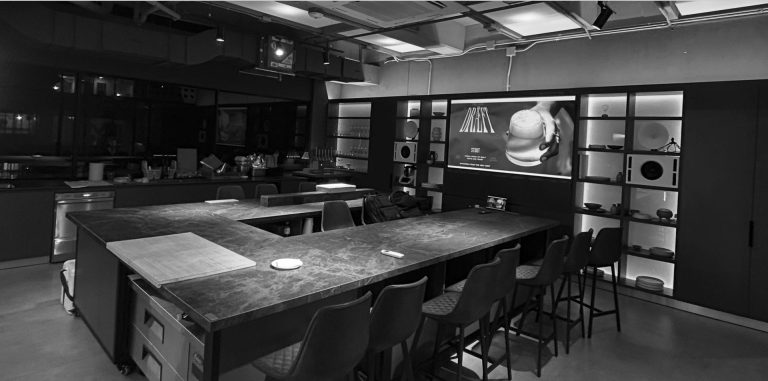
Through Draëft, the first consumer platform built on HASP technology, this model is now rolling out to bars, restaurants and hotels in Colombia, with expansion planned across Latin America.
The bottom line
Moderation is not a passing fad. It is part of a broader move toward more conscious, more personalized consumption, and it is reshaping the economics of the global beverage industry. The question for operators is no longer whether to offer alcohol-free options, but how to offer them well, profitably and at scale.
We believe the answer lies in infrastructure: systems that bring production closer to the guest, put choice in the operator’s hands and make every serve measurable.
Interested in how HASP technology can support your venue’s beverage offer? Talk to our team